
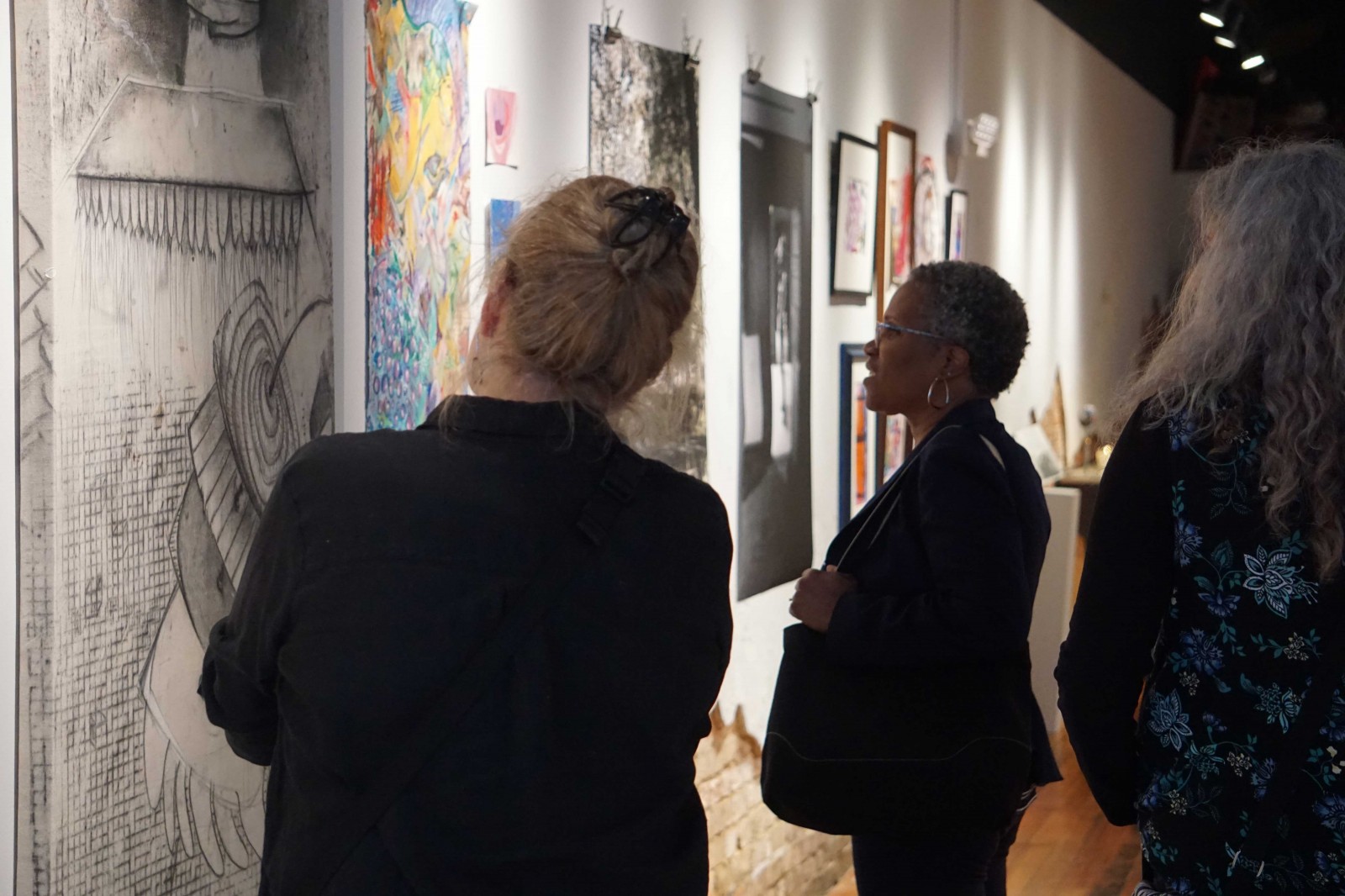
More Than a Meal: The Story Behind Blue Ethiopian Cuisine & Café

Walk into Blue Ethiopian Cuisine & Cafe in downtown Champaign, and owner Bezza Ayalew will likely greet you with a menu and an invitation: belu—an Amharic word meaning "eat," and the quiet philosophy behind everything he’s built here. For Ayalew, Blue isn't just Champaign’s only Ethiopian restaurant. It's two decades in the making, rooted in family tradition, linguistics, hospitality, and an unlikely path that led him from Ethiopia to a storefront on Walnut Street.
A Childhood Across Ethiopia
Ayalew was born in Ethiopia’s Amhara region, in an area historically known as Gojjam, before moving frequently throughout his childhood—first to Addis Ababa when his father took a government post, then to the southeastern Arsi region, and eventually back to Gojjam after political unrest forced the family to relocate. "I grew up everywhere," he says. "I'm not from the countryside alone. I grew up in the city, too."
That upbringing shaped his understanding of Ethiopian food itself. While regional dishes vary, Ayalew explains that a dominant, shared culture emerges in urban centers, pulling the best of each region’s cuisine toward the center. "Whatever was important has already come to the center," he says. "It's not the food culture of one ethnicity."
Cooking was woven into his early life: His mother, raising four boys, insisted they all learn to cook, with one exception. “I would do everything except make injera, which is more or less considered women’s work,” he says, adding that even today, men making injera is unusual in Ethiopian households. His grandmother also ran a restaurant in Gojjam, where young Ayalew helped prepare meat and learned about hospitality long before he ever imagined opening his own restaurant.
From Linguistics to Champaign
Ayalew’s road to Champaign had nothing to do with food. A linguist by training and former head of the Department of Ethiopian Languages at Addis Ababa University, he came to the United States to work on a textbook development project at the University of Wisconsin–Madison’s National African Language Resource Center. At the time, political conditions in Ethiopia were deteriorating, and the opportunity became his way out.
While in Wisconsin, Ayalew pursued a PhD in linguistics, having applied to both Wisconsin and the University of Illinois. Illinois admitted him first but initially without funding support; when funding came through in 2006, he transferred and has called Champaign home ever since. “I like smaller cities like this—it’s a very embracing community,” he says. “From the first day I was here, I liked the place.” He and his wife raised two children in Champaign; both are now in college.
An Idea Twenty Years in the Making
 The idea for a restaurant took root early, long before Ayalew ever pursued it. He noticed that Americans—his friends, classmates, colleagues—consistently responded with enthusiasm whenever they tried Ethiopian food at gatherings he hosted. “When I observed that Americans who tried foods from other cultures liked it, they talked highly about it,” he says. “I felt that if I were to stay in this place, maybe I would have to open an Ethiopian restaurant.” That thought first crossed his mind roughly 20 years ago, long before Blue became a reality. Plans to open a restaurant were in motion even before the COVID-19 pandemic, which delayed the project further.
What “Blue” Really Means
As a linguist, Ayalew wanted the restaurant’s name to carry cultural weight. Belu is the imperative form of the Amharic verb meblat, "to eat," a word Ethiopian hosts use throughout a meal to encourage guests, who may be too polite or shy to eat their fill, to keep going. “In our culture, when you host guests, they tend to be a little shy in eating,” he explains. “The host wouldn’t feel satisfied with how the guest is eating, so you go around and say belu—please eat.” The term, similar to the English word blue, also happens to double as his favorite color. Even Ethiopians, he notes, often don't catch the wordplay at first glance.
Finding a Home
Ayalew hadn’t planned to open somewhere so large. An earlier, smaller location fell through at the last minute, and every other space he considered was either too big or too expensive for his budget. Eventually, he landed on the historic building that once housed Radio Maria and, later, Farren’s Pub. The space came with a bar Ayalew hadn’t originally wanted (running both a full restaurant and bar felt daunting for a first-time business owner) but with support from friends, he decided to take it on. “It’s like the center, a very beautiful place,” he says of the location.
The Basket, the Injera, and 22 Stews
Central to Blue’s concept is delivering a complete Ethiopian dining experience—not just the food, but the customs around it. The restaurant’s communal mesob baskets, imported directly from Ethiopia, reflect the tradition of eating together from a shared surface. “That basket is representative of the culture of Ethiopian life,” Ayalew says.
 At the heart of the menu is injera, the spongy, fermented flatbread made from teff—one of the smallest grains in the world and notoriously difficult to cultivate and process, lacking the gluten needed for conventional bread-making. Ayalew describes the fermentation and cooking process as an art form passed down through generations of Ethiopian women, resulting in injera’s signature sour note and bubbled texture—a flavor and texture essential to balancing the richness of Ethiopian stews.
Blue offers roughly 22 varieties of stews and stir-fries, split between meat and vegan options, drawing on Ethiopia’s historic position along ancient trade routes. Spices like berbere (named from a Greek word for pepper) and influences from Persian, Indian, Arab, and Mediterranean cuisines reflect centuries of cultural exchange. Dishes like kitfo—minced raw beef infused with spiced clarified butter—trace back to Ethiopia’s Gurage region, while doro wat, the iconic chicken stew, is strongly associated with the Amhara region where Ayalew was born.
Interestingly, Ayalew notes that many of his regular customers are of Indian descent, drawn to the shared love of legumes and bold spice. Families have also brought young children in to try the food—something Ayalew takes particular pride in, since introducing children to complex, spiced adult cuisine is notoriously difficult. “That’s very encouraging for us,” he says.
The Ancient Grain Behind It All
If there’s one ingredient that defines Ethiopian cuisine more than any other, Ayalew says, it’s teff—the grain behind injera and, in his view, the foundation of the entire culinary tradition. Teff is believed to be one of the first domesticated grains in human history, cultivated by Ethiopian ancestors thousands of years ago from a wild grass. It also happens to be the smallest grain in the world, a detail Ayalew finds remarkable given how central it became to an entire nation’s diet. “Many civilizations had other crops that were easier to cultivate,” he says. “So why would they stick to this thing?”
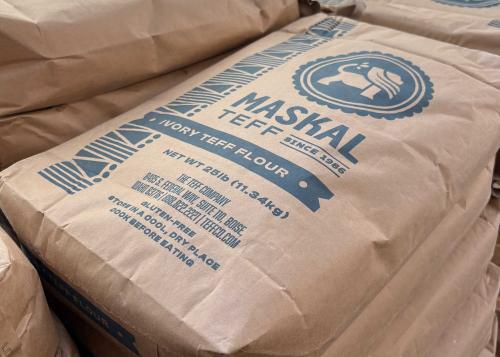
That difficulty is part of the story. Harvesting teff’s tiny grains is painstaking work, and because teff lacks the gluten found in wheat, turning it into bread requires an entirely different process than most of the world’s flatbreads. Ethiopian cooks—traditionally women, Ayalew notes—developed a method of fermenting teff flour over several days, allowing natural yeasts to transform the batter before it’s cooked into injera. Done correctly, the batter forms a network of tiny, even bubbles across the surface as it cooks, giving injera its signature spongy texture. “The art of making the batter is as if you did it by formula,” Ayalew says. “You wouldn't see that uniform, beautiful texture unless it was done exactly right.”
Beyond its culinary role, Ayalew sees teff as something close to a point of national pride—a crop so demanding to cultivate that its survival as Ethiopia’s staple grain speaks to generations of agricultural knowledge passed down specifically to preserve it. He also points out that teff has drawn growing attention outside Ethiopia in recent years, including cultivation efforts within the United States, as more people discover its nutritional value. It’s naturally gluten-free, high in fiber, and rich in minerals like iron and calcium. For Ayalew, serving authentic injera is carrying forward thousands of years of agricultural and culinary tradition.
Coffee, Tea, and Tej
No visit to Blue is complete without its ceremonial coffee service—a nod to Ethiopia’s role as coffee’s birthplace. Made from a single-origin Ethiopian coffee and brewed the traditional way in a clay pot, the coffee is served with incense, a presentation Ayalew says customers often photograph and share. The cafe also serves Ethiopian spiced tea and, more recently, tej, an Ethiopian honey wine brewed on-site and bottled under Blue's own label. Ayalew sees tej as another way to deepen the dining experience, especially for guests looking to pair something distinctly Ethiopian with their meal.
A Place to Belong
While Blue wasn’t originally conceived as a destination for the local Ethiopian community specifically, Ayalew has been moved by the response from unexpected corners—particularly families throughout Central Illinois who’ve adopted Ethiopian children and now drive in from Peoria, Springfield, and beyond for a taste of home. “They told us, ‘We’re happy to have you here, because otherwise we'd have to drive to Chicago, Indianapolis, or St. Louis,’” he recalls. For Ayalew, their gratitude turned the restaurant into something bigger than a business. “If I cannot make it, I would feel like I’m betraying those people who feel like they have a home now,” he says.
 The road hasn't been easy. Ayalew is candid about the challenges of running a first-time business, like limited startup capital, a slower-than-expected summer, rising costs, and the steep learning curve of an industry he’s never worked in before. Still, his sense of purpose remains clear: to give the Champaign-Urbana community, which he says embraced him and his family from day one, a full and authentic taste of Ethiopia.
Looking Ahead
Ayalew hopes to deepen Blue’s role as a cultural gathering space, hosting Ethiopian holiday celebrations, live music, and cultural events as the business stabilizes. The restaurant recently celebrated Enkutatash, the Ethiopian New Year; participated in downtown Champaign's community U of I homecoming festival with tej and sambusa specials; and has partnered with Afro Tailgate, a University of Illinois African student organization.
And while Blue keeps him busy, Ayalew hasn’t entirely let go of his academic roots. A linguist with unfinished research on his native language, he says the work remains in the back of his mind. For now, though, his focus is on the restaurant—and the Amharic invitation in its name: Come eat.